Hurricane Tracker
Central Pacific Hurricane Center · tropical cyclones near Hawaii
Near Hawaiʻi
7-Day Tropical Outlooks· last season ended · new outlooks begin Jun 1
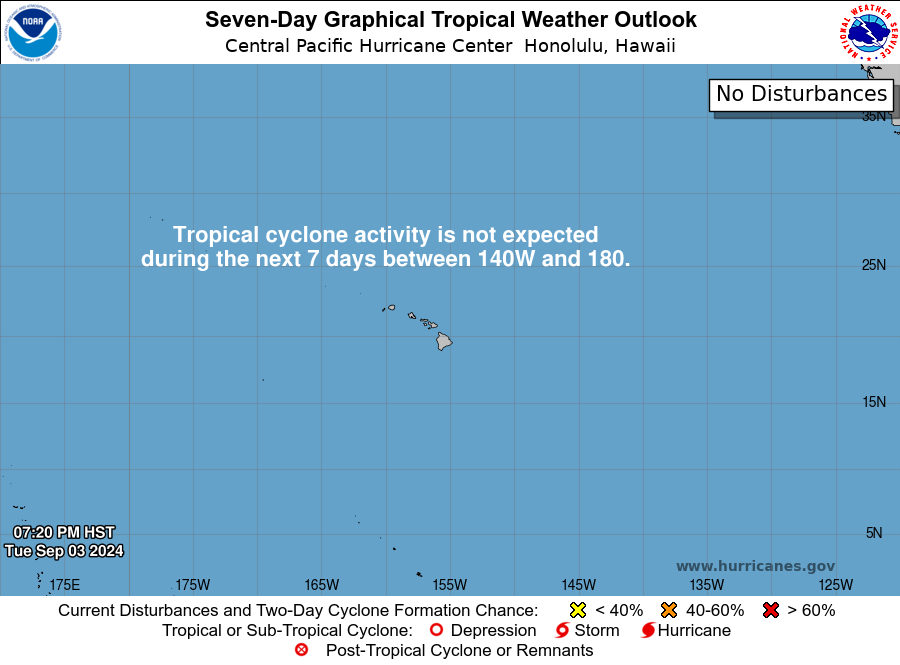
Central Pacific · CPHC
Updated every 6 hours
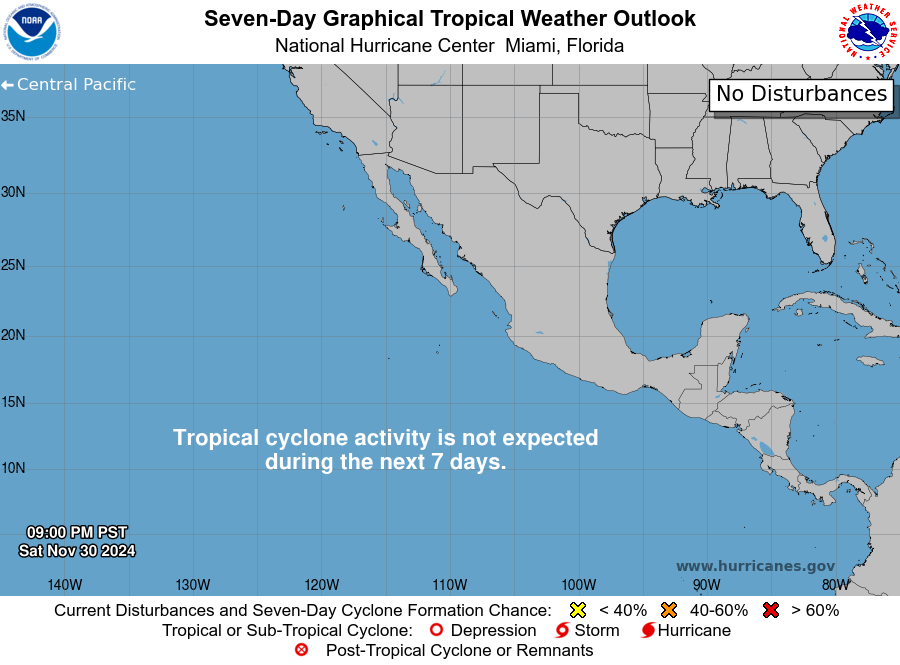
Pacific Wide · NHC
Eastern + Central basins
Sea Surface Temperatures
Ocean heat that fuels tropical cyclone development
Threshold
26.5°C/ 80°F
Minimum SST for tropical cyclone formation
Hot Zone
28°C+/ 82°F+
Most energy available, storms intensify rapidly
El Niño
Warm pool expands eastward
Increases hurricane risk near Hawaiʻi
2026 Season Outlook
Seasonal ocean and El Niño outlook
Loading the latest ENSO outlook from NOAA.
What this means for Hawaiʻi: El Niño weakens the trade winds and warms the central Pacific, favoring more tropical storms and hurricanes near the Hawaiian Islands. The 2015-16 super El Niño brought a record 16 Central Pacific storms, about three times the long-term average. Comparable strong El Niño years: 1982-83, 1997-98, 2015-16.
SourceNOAA CPC ENSO
Prepare Now
Don't wait for a hurricane, stock up, plan, and know your zone
With an elevated season ahead, prepare while stores are stocked and you can think clearly. Hurricane prep isn't a panic-buy checklist at hour zero, it's a series of calm decisions made now.
Tropical cyclone scale
Tropical Depression
< 39 mph
Rain & flooding
Tropical Storm
39–73 mph
Damaging wind
Hurricane Cat 1–2
74–110 mph
Major damage
Major Hurricane 3+
111+ mph
Catastrophic
Resources
Source: NOAA National Hurricane Center